

Erasure

A tombstone
Awaiting its pearl
With its salt and saliva
Welcomes red wild roses
And wishes luck
to count down stars
Melting tones
Winter greens
Lush of lust
They were craving for depths
Smelling mud, a skull laughed
If it withers, can life become?
Road taken from calm rails
Unto this last ring of hope
All colours are a hue and tint
But a bliss of fire from far
Never heard of corridors
That lives beyond light
Yet darkness wore shades
Happiness hidden from colours
Sinking sorrow
With a drunken vessel
Still shores loved its senses
Beams so young
clouds so long
They could meet in vapours
Stirring rain
Striking gold
All in a day's harm
Smiling leaves
Embraced the roots
Heart and its wrinkles
Heaps of hopes in hollow
Hands had enough
Harness the mask
Dance to the dusk
Day longs thereafter
Stretches of skin
Marked its white
Fair faces drowned
And lived in nymphs
Loud old voices
Lean line of thought
Tone down mirrors
Open for stillness
Closed this erasure
Away from the seizure
None could erase the epitaph
Though fate was rewritten
In mirage and rage
Infinite stars and finite spans
They loved this soliloquy
Long long tentacles
Craving for memoirs
Made a mirror of seizure
And sleepy monster lied in charm
'Where there is an ill, there is a will'
Unfilled sky thus rained in still
Gokul B.Alex
.

Destiny of a Decade
Stolen Spaces and Marching Ants !

Time is a tyrant! And a decade is a mere dust in the sands of history but it means much more in the life of a human being. In the mainstream media recap, we see a decade as a sequence of events and tale of newsmakers. Seldom does it lead to interpretation and introspections. In such an attempt, we can see that a decade means different for each strata of society. In the lives of upper class, technology and social media invaded personal experiences to the deepest. Simulations stimulated their desires and plenitude of choices pampered their lives. The working class had to confront tightening labour laws and insecure way of life. Labour increasingly became a mobile commodity integrated to the supply chains and global delivery models. The poor were encircled by spiralling prices and weakening welfare state schemes. Rather than growth, poverty trickled down to the downtrodden.
Under the pretext of globalization, world economy became an integrated financial market. World became flat in that sense. The poor were erased from the flash memories of the elite and the aspiring ones. On the other hand, because of digital divide and growing economic disparity, world became more and more opaque. Adding to the woes of the wretched, Mother Nature created havoc to the millions in the forms of thunderstorms, earth quakes, floods, Tsunami and cyclones. More than anything these calamities exposed the callousness of the governments and the micro-politic agenda of the donor agencies. India saw the massive earthquake in Gujarat (2001) which took more than 30,000 lives.
Indian polity saw the resurgence of coalition governments in Centre adding a new dimension to federalism. The Tehelka expose took the political bureaucracy by storm. The Gujarat riot will always remain as a blot of this decade. The failure of Agra summit put Indian diplomacy in no man’s land. Indo – US nuclear deal generated much acrimony and put an end to the love –hate relationship between UPA and left. Maoists aided by the inflow of weapons from Bangladesh and Myanmar became the serious threat to Indian internal security. The political economy of Kashmir improved marginally and gave way to democratic process.
The same decade saw the upsurge and retreat of globalization. The hype of Y2K puzzle disappeared in thin air. None bothered to count the millions lost in preparing precautionary steps. The alliance of Time Warner and America Online (2000) became the big hit of the millennium. The honeymoon of techies did not last longer. The Tech crunch (2001) and the dotcom bubble were the preludes for the recessions to come. In this sound and fury, all ignored that it was the collapse of minnows which led to the formation of monopolies in technology.

Silicon Valley emerged as the hub of information technology. IT revolution was nothing but the use of existing computer communication platforms for financial and international trade networks. The wave of globalization of labour and capital was accelerated by internet technologies. In Doha round of negotiations of World Trade Organization (2001), it was USA, European Union and Japan which stood for agricultural subsidies retreating from their previous support for neo-liberalism. Though it exposes the hypocrisy of imperialism, more evident is their losing faith in the free market principles. The changing tides of world economy favoured the labour capitals like China, India, Indonesia, Brazil and ASEAN nations. The fundamental importance of productive forces in a political economy was amplified by this.
Corporate capitalism exposed its wilderness and chaos with the collapse of the American Energy sector giant ‘Enron’ in 2001. Sarbanes-Oxley laws tried to take grip on US corporate governance. The roller coaster ride of free market capitalism met an unexpected twist from the high heavens itself. American Hedge fund investment groups started collapsing. Mortgage giants like Freddie Mac and Fannie Mae bailed out their prestige. None could save the fate of sinking Lehman Brothers, 150 years old Investment Bank. Entire financial market in the developed economies felt the tremors. The recent market updates reveal that US economy hasn’t yet circumvented the recession despite the massive government bailout.
This decade witnessed the madness of American imperialism as they invaded fragile nation states using their military might. The aerial attacks on the twin towers of World Trade Centre in September 11, 2001 became the launch pad of American neo-colonial interests. Greed for Oil and urge to retain the dollar hegemony led them to cook up stories against the Saddam Hussein regime in Iraq. When American Missiles bombarded the planning ministry in Iraq (2003), world conscience was a mute spectator. On the other hand, geopolitical interests in Central Asia and the hunt for Osama Bin Laden were the reasons for the Afghan invasions (2001).
Almost ten years on, the war on terror is on going. Taliban and Opium trade in Afghanistan is on rise again. Incapable to curb this, US-NATO army is busy murdering civilians in the Af-Pak border. Abu Gharib jail tortures exposed the savage side of American civilization. The controversial Guantanamo prison opened by USA to detain the war prisoners (2002) is on the verge of closing down.
Organized crime and terrorism were the perennial disturbances for the entire decade. Few realised these as the fruits of social anarchy spread by the proliferation of market economy world wide. The Somali young terrorist holding the American weapon exemplifies the dialectical relation between imperialism and terrorism. US shipped more than 40 tons of weapons into the ports of Somalia. The new decade will tell us who the recipients were. We saw terrorism getting the religious tint everywhere from Indonesia to Colombia. The state of affairs rekindles the memories of crusades in history.
The entire Islamic nations who were against the American oil greed were tainted as terrorists. Thus political Islam was equated with terrorism. By sabotaging the democratic governments in Islamic nation states Imperialism sowed the seeds of theocracy. Yet we failed to realize that terrorism was best exploited by Imperialism to fragment the opposing nation states. Baltic nations and South East Asia stands as the victim to these experiments. But world polity relishes in the convenience of forgetting.
The world continues to be hot and simmering for the Palestinians with Israel breaching all the limits of atrocity. Palestine lost their iconic leader Yasser Arafat in the middle of this decade. All throughout this decade this West Asian strip of land was stripped of all the human rights. Goldstone commission appointed by UN (2009) was a mild solace to their concerns.

The decade saw the transformation of culture industry from a mass media to hegemony over human capital. The decade began with the arrival of Survivor – the Reality show, first of its kind. It was an instant hit in USA. With ‘Idea Star Singer’ making waves all over Kerala just all in this decade we can sense the spread of a global mass culture. Social media became the second nature of netizens. Twitter, MySpace, Facebook and Orkut satisfied the tribal instinct of millions of people. Yet there are concerns of privacy and information security in these social networks. Identity of individual was lost somewhere in the networks. Wikipedia became the ultimate source of anything and everything on universe. The potentials of these sources take us also to the concerns on the authenticity and ideological intentions. The potentials of music were best explored by Apple Inc with their ‘iPod’.
One cannot ignore the winning strides of science in this decade. And we salute in the memory of seven space scientists who shed their life with the burning Colombia Space shuttle (2003). The Genome project (completed first stage in 2003) and the Chandrayan moon mission (began in 2008) were crowing achievements of the decade. SARS and bird flu consumed many lives world wide. It revealed the vulnerability of the healthcare systems world wide. Climate change concerns became a political issue in no time. Development politics and environmental politics locked horns in various international forums. Much hyped Copenhagen summit (2009) failed to deliver any progressive results though it created a coalition of developing nations.
In this decade, imperial states, non-state actors, NGOs and the donor agencies were the key players in the world polity. Identity politics and micropolitics were their weapons for fragmentation of democracies world wide. They scan even the smallest space of every individual. On one side, they weakened the democracies by instigating ideologies of decentralization of power through micropolitics. On the other end, they created political anarchy by funding identity politics and exporting political terrorism. At the end of this drama, as a saviour of democracy, US imperialism marches to foreign soils to liberate the people and deliver them to the world market. Confrontation between democratic nation states and market forces happened to be the major current of this eventful decade. A society wandering in stolen spaces; it is the gift of this decade.
Gokul B.Alex
ഒരു 'ഉപഹാര'സ്മരണ

ഒരു മധ്യാഹ്നത്തിന്റെ നിനവില്
അവളെനിക്കു 'രണ്ടാമൂഴം' വച്ച് നീട്ടി
ഒരു പകല്ക്കിനാവിന്റെ ഉറക്കച്ചടവില്
ഞാനതിന് പുറം ചട്ടയില് തലോടി മയങ്ങി
തെരുവിന്റെ ഊഷ്മാവിനെ ഞാന് അറിഞ്ഞില്ല
ഓരങ്ങളിലെ ഉന്മാദ ലഹരിയെ ഞാന് കുറുകെ കടന്നു
ഒരിക്കലും പൂക്കാത്ത ചന്ദന തൈമാവും മധുരം നിനച്ചു
വിറയ്ക്കുന്ന എന്റെ ചുണ്ടുകള് പ്രണയത്തെ തെറ്റിദ്ധരിച്ചു
ഓളങ്ങളില് നിലയക്കാത്ത കയങ്ങളുണ്ടെന്നു ഞാന് അറിഞ്ഞില്ല
ചുവന്ന പുകച്ചുരുളുകളുടെ പോരുളെന്തെന്നു ഇനിയും എനിക്കറിയില്ല
കത്തികരിഞ്ഞ നിലങ്ങളെ സാക്ഷി, ഞാന് അകലങ്ങിളില് ഈര്പ്പം നുകര്ന്നു
പകര്ച്ചപ്പനിയെ പേടിച്ചരണ്ട നാട്ടില് ഞാന് കോമാളിയുടെ ഭാവപകര്ച്ച തേടി
ഇനിയൊരിക്കലും വഴാങ്ങാത്ത ഊഴങ്ങളില് ഞാന് ഊഴിയിട്ടു
വഴിയോരങ്ങളിലെ സീല്ക്കാരങ്ങളില് വിടരുന്ന പാലപ്പൂക്കളെ ഞാന് കണ്ടില്ല
ഭീമന് വൈദേഹിയെയും പാഞ്ചാലി രാമനെയും അറിഞ്ഞിരുന്നെങ്കില്!
വടവൃക്ഷം ബാക്കിയായി, പിന്നെ കുറെ താപസ വാല്മീകങ്ങളും
നിസംഗം, നിശൂന്യം, നിര്ലജ്ജം, നിര്വ്യാജം നീരദങ്ങളെ ഞാന് പ്രണയിച്ചു
സത്യം അസത്യത്തെ തെടുന്നുവേന്നറിയാന് നന്നേ വൈകി
പിഴക്കാത്ത കണക്കുകളില് അഭിരമിക്കുന്ന കാലങ്ങളെ പഴി പറഞ്ഞു ഞാനും
ഞാനില്ലാത്ത നിലാവും നീര്നായകളും നാല്കവലകളില് നായാടി
ചെമ്പന് പുകച്ചുരുളിന് ധൂമമായി ഞാന് അലിയട്ടെ അക്ഷരച്ചുരളുകളില്
വേണ്ട! ബാക്കി വയ്ക്കാന് ഓര്മയുടെ അക്ഷയപാത്രങ്ങളൊന്നും തന്നെ
അവളെനിക്കു 'രണ്ടാമൂഴം' വച്ച് നീട്ടി
ഒരു പകല്ക്കിനാവിന്റെ ഉറക്കച്ചടവില്
ഞാനതിന് പുറം ചട്ടയില് തലോടി മയങ്ങി
തെരുവിന്റെ ഊഷ്മാവിനെ ഞാന് അറിഞ്ഞില്ല
ഓരങ്ങളിലെ ഉന്മാദ ലഹരിയെ ഞാന് കുറുകെ കടന്നു
ഒരിക്കലും പൂക്കാത്ത ചന്ദന തൈമാവും മധുരം നിനച്ചു
കല്പിത കാലത്തിന്റെ പ്രവചനങ്ങള് എന്റെ നെറുകയില്
ചന്ദ്രബിംബവും ജാലകം ചാരിനിന്നവളും നല്ല മരീചികകള്
വിറയ്ക്കുന്ന എന്റെ ചുണ്ടുകള് പ്രണയത്തെ തെറ്റിദ്ധരിച്ചു
ഓളങ്ങളില് നിലയക്കാത്ത കയങ്ങളുണ്ടെന്നു ഞാന് അറിഞ്ഞില്ല
ചുവന്ന പുകച്ചുരുളുകളുടെ പോരുളെന്തെന്നു ഇനിയും എനിക്കറിയില്ല
കത്തികരിഞ്ഞ നിലങ്ങളെ സാക്ഷി, ഞാന് അകലങ്ങിളില് ഈര്പ്പം നുകര്ന്നു
പകര്ച്ചപ്പനിയെ പേടിച്ചരണ്ട നാട്ടില് ഞാന് കോമാളിയുടെ ഭാവപകര്ച്ച തേടി
ഇനിയൊരിക്കലും വഴാങ്ങാത്ത ഊഴങ്ങളില് ഞാന് ഊഴിയിട്ടു
വഴിയോരങ്ങളിലെ സീല്ക്കാരങ്ങളില് വിടരുന്ന പാലപ്പൂക്കളെ ഞാന് കണ്ടില്ല
ഭീമന് വൈദേഹിയെയും പാഞ്ചാലി രാമനെയും അറിഞ്ഞിരുന്നെങ്കില്!
വടവൃക്ഷം ബാക്കിയായി, പിന്നെ കുറെ താപസ വാല്മീകങ്ങളും
നിസംഗം, നിശൂന്യം, നിര്ലജ്ജം, നിര്വ്യാജം നീരദങ്ങളെ ഞാന് പ്രണയിച്ചു
സത്യം അസത്യത്തെ തെടുന്നുവേന്നറിയാന് നന്നേ വൈകി
പിഴക്കാത്ത കണക്കുകളില് അഭിരമിക്കുന്ന കാലങ്ങളെ പഴി പറഞ്ഞു ഞാനും
ഞാനില്ലാത്ത നിലാവും നീര്നായകളും നാല്കവലകളില് നായാടി
ചെമ്പന് പുകച്ചുരുളിന് ധൂമമായി ഞാന് അലിയട്ടെ അക്ഷരച്ചുരളുകളില്
വേണ്ട! ബാക്കി വയ്ക്കാന് ഓര്മയുടെ അക്ഷയപാത്രങ്ങളൊന്നും തന്നെ
.
ഗോകുല് ബി. അലക്സ്

Intellect Explorer
Random Thoughts, Chaotic Knols and Vivid Dreams unfold here ...
It will expand and explore, in and through the times to come.
Beyond the deadlines ! Keep watching this space.
Gokul B.Alex
It will expand and explore, in and through the times to come.
Beyond the deadlines ! Keep watching this space.
Gokul B.Alex
Capitalism and the Paradise lost
The Economic Crisis! for whom?

An economic crisis is not made in a day; not in a month or not even in a year. It heaps up gradually; gaining momentum when everything else slows down. Once it is accepted as arrived, it will be a rather late confession. The recent economic crisis is also not different. The 2008 economic crisis hunted down the once almighty financial institutions of United States of America. Lehman Brothers, founded in 1850 became its first famed victim. It was a primary dealer in the U.S. treasury market. Mortgage companies Fannie Mae and Freddie Mac were the next in the queue. This list includes the insurance giant AIG in the US, Northern Rock in the UK, and Fortis and Dexia in Belgium.
After a lot of pandemonium, they were royally bailed out. But none gave any importance to the many voiceless who were out of their payrolls all of a sudden. The millions of jobless just became mere percentage numbers of little interest. The unemployment index in the US kept ticking up again and again.
There is a line of thought that names the economic crisis as a result of credit crisis. They attribute the crisis to the sub-prime mortgage business. The subprime mortgages typically came with a low interest for the first few years, and then a drastic increase. The risks were usually not fully explained, and many borrowers were told they could easily refinance the mortgage in a few years to keep their interest rate low. But in 2005-2006, it came time to pay the piper.
Interest rates on the subprime mortgages shot up. Many new home owners were unable to pay or refinance. The crisis should have been confined to the US home owners. Unfortunately the banks and lenders making these loans had sold the debt to investors. The debt assets had been diced up and sold to other investors and banks around the world, in complicated financial packages that few people seemed to fully understand.
During 2007, nearly 1.3 million US housing properties were subject to foreclosure activity, up 79% from 2006. Nobody seemed to have any ideas who owned these ‘worthless’ debts, spread out throughout the whole worldwide financial system. Suddenly banks weren’t willing to lend to each other any longer, resulting in a ‘credit crunch,’ a period where there is little liquidity (or money) in the system because nobody is lending. The losses started to roll in. By July 2008, major banks and financial institutions around the world reported losses of approximately $435 billion.
This simply means that U.S. banks were blindly giving away the loans to people with poor credit histories. But they don’t have any complaints at the gargantuan sum of money that fills up the bourses of the Wall Street hedge fund managers. Even after being bailed out, banking monoliths like Citigroup were paying their top echelons with hefty sums of money.
Only a few analyse the pitfalls in the US risk management system based on the use of financial derivatives, which exacerbated the crisis. It demands a deeper enquiry in to this angle.
The capitalist economists are trying hard to find out an intellectual remedy to the trouble that has engulfed the world economy at large. But they fail to acknowledge the inherent nature of objective contradictions in the capitalist system that breeds crisis and economic slumps time and again.
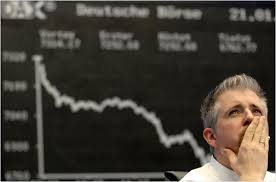
The subprime mortgage crisis and the credit crunch aren’t the only factors in the 2008 economic crisis. Oil prices shot up to a record high, driven by the increasing energy needs of China and India and other emerging economies. This has dramatically affected consumers in North America and Europe in two ways. Consumers have been forced to pay much higher prices for fuel to fill their cars and heat their homes, and at the same time the increased food cost has driven up food prices dramatically, because it takes fuel to produce and transport food. Food has become so much more expensive in the developing world that it has resulted in food riots in some instances.
The current decade has seen a significant commodities boom, after a commodities depression in the 1980s and 1990s saw prices at extreme lows. By 2008, oil had reached a level that people could no longer afford, going above $100 a barrel for the first time in history in January 2008. But even this high seemed like nothing by the time July rolled around, when oil reached $147 a barrel. There has been a rapid slowdown in North American and European economies. On 30 September the UK revealed that it had zero growth for the past quarter. This analysis into the commodity boom explains the housing bubble-bust theory partly.
The role of the international finance capital (its peculiar and speculative nature) and the vicious cycles of dollar hegemony in this mayhem cannot be minimised. The finance capital in US economy got upper edge over the industrial capital even as early as 1960s. We can trace the seeds of the present economic crisis there itself. US industrial giants transferred their capital into the risky streams of investment banking. The giants like General Electric and Citibank entered the finance capital arena with their full throttle. Apparently, the US money economy expanded by leaps and bounds though the real economy was lagging way behind. The consumption in the economy also risen sharply reaching 70% of the US GDP. Out of this amount, a large sum was credit money in nature. Thus the credit economy dwarfed the real economy by many orders of magnitude.
The contradiction between the international finance capital and the national sovereignty is worth mention here. The dollar hegemony over other currencies was a need for the international market forces too. The US imperialism and its proxies like International Monetary Fund (IMF) and World Bank tweaked and twisted the national governments to facilitate this spread of dollar umbrella. Thanks to this, the US finance capital with all its infectious diseases penetrated into the world economy.
The rest is history, full of sound and fury and panic in the golden corridors of wealth. The further grim side of this event was that the very same crisis was used by the wealthy to exploit the downtrodden masses. Trillions of money was pumped into the bourses of the rich, all out of the shrinking pockets of the millions of poor.
Gokul B.Alex
Maoism In India: Making Of A Myth
Wounded Tiger, Hidden Falcon

Marxism was never embraced like this. The media barons who are arch rivals of communism, like Malayala Manorama and Indian Express are moving earth and heaven pleading to Indian state to have a chat with the Maoists. Their broadsheets are laying down hundred many reasons for the Maoist insurgency and the heinous crimes which they practice ruthlessly. Where Marx was aspersed, Mao becomes the chant! What a twist! Many civil society intellectuals are joining this bandwagon, raising their voices for the historic causes of Maoism. The same folks are found fighting the mainstream left parties at every possible opportunity. This visible contradiction exposes the apolitical platform leveraged by Maoist outfit.
In this backdrop, we see Maoism looming large as a powerful phenomenon in the contemporary socio-political arena. Following their international trails, we can see that they have many links with International splinter groups of Maoism world wide and Revolutionary International Movement (RIM), Revolutionary Communist Party (RCP) of Canada and it takes us to their connections with LTTE and Islamist terrorists operating in South Asia and South East Asia.
There are reports that they even have links with Hindutva fringe groups of RSS clan in India. This relation is unaffected by their love-hate relationship with BJP and VHP. A Maoist caught in Mumbai conceded that he was funded by Medha Patkar and Shiva Sena. Suspected Naxalite Arun Ferreira in his narco-analysis test has alleged that many political parties, including Shiv Sena and its chief Bal Thackeray, have been funding Maoist activities in Mumbai.
The narco-analysis report, a copy of which is available with PTI, quoted Ferreira as saying, “Bal Thackeray and his party Shiv Sena and the BJP student wing Akhil Bharatiya Vidyarthi Parishad (ABVP) had given us funds regularly for Maoists activities in Mumbai.” This shocking revelation came when Ferreira, a city resident, was asked about the funding of the activities of the banned outfit CPI (Maoist) in the country’s financial capital.
[Source : http://darkindia.wordpress.com/2008/08/17/shiv-sena-abvp-funded-maoists-says-naxalite-during-narco-test/]
This combination seems impossible from a plain political perspective. And it leads us to think about the breeding grounding of these diverse forms of polity. Thus Maoist movement is transforming itself into a potent mixture for fringe groups of all kind. This is the new form of polity devised by Imperialism. Rather than striking an enemy from outside, create Trojan horses inside and make them proliferate using money, persuasion, ideology and what not. This was successful as against USSR. And the same Imperial polity is gaining ground in communist nations and developing countries world wide.
 |
| Maoist Affected States in India |
Seeing the Maoist love relationships with the Civil Society intellectuals like Arundhati Roy, BRP Bhaskar and Swami Agnivesh, we can see that Maoism is becoming the full fledged army for executing the praxis of NGOisation of Indian polity. NGOisation of Indian polity has been expanding in Indian soil since 1970’s. Indian Maoism has become the cutting edge tool in their hand. Maoist agenda of capturing the Indian state from the comprador bourgeoisie goes hand in hand with the Imperial agenda of fragmenting Indian nation state. The same agenda of fragmentation was preached in veils by various flavours of Identity politics like Dalit, Feminist kinds. By invoking the divisive identities of caste, tribe, religion and gender, Imperialism aims to fragment the national identity. This ideology has roots in the ethnographic works of Franz Fanon and Jacques Derrida.
Mao never formed a doctrine of Maoism. All that he had done was to form a theoretical praxis in context of revolutionizing the Chinese Economy of 1920’s. It was before the decolonization spree in Asia and Latin America. Thus the nature of nation state under Mao’s period was poles apart from that of today. Theory of Protracted Peoples War as developed by Mao was to be applied in semi-feudal, semi-colonial countries. Such a denomination does not suit the Indian Political Economy ruled by big bourgeoisie in lieu with the semi-feudal caste ridden social fabric.
Mao exhorted his comrades to work with people like a fish swimming in water. It was never a device to terrorise the people. According to the Institute of conflict management, Indian Maoists are partially funding their terrorist activities with profits from illicit opium, poppy and cannabis crops. It is reported that they have unlicensed opium fields in Jharkhand and Bihar. According to the 2008 Mohanty commission of inquiry, the CPI-Maoist and its front groups were behind extensive cannabis cultivation in Orissa. One group, People’s War, which later merged with the CPI-Maoist, was allegedly in charge of between 7,500 and 10,000 acres of sown with cannabis. This makes them apparent heir to the nick name ‘Red Taliban’.
There are also reports that some Magsaysay award winners funnel their money to help the Maoist movement in India. Interestingly, Magsaysay award is funded by Ford Foundation and Rockfeller Brothers Fund. As exposed by the leftist academic James Petras in 1970’s, Ford foundation has deep rooted ties with CIA. Thus the vicious circle framed by the Imperialist agenda find it comfortable to use the veneer of Maoism to reach the masses.
As explained by Comrade Baburam Bhattarai from Unified Communist Party of Nepal (Maoist) [UCPN(M)] below, Maoist tactics of overthrowing the state ruled by a class through the use of barrel of a gun stems from the socio-political nature of the state.
“In the specific conditions of Nepal, though we are in the stage of transition from feudalism to capitalism, in our case the feudal system had been basically led by an autocratic monarchy for thousands of years. In most third world countries autocratic monarchy has already been abolished, and in those countries though the basic foundation of society is still semi-feudal, semi-colonial, the political superstructure was led by bourgeois democrats. But in our case even the political superstructure was dominated by the autocratic feudal monarchy, the national bourgeoisie was very weak and they could not carry forward the bourgeois democratic revolution. It was the proletarian party which had to take the lead to abolish the autocratic monarchy and introduce a bourgeois democracy, which could be again transformed through struggle into New Democracy, a proletarian democratic system”
[Source :http://southasiarev.wordpress.com/2009/10/28/nepal-interview-with-bhattarai—fusing-peoples-war-and-insurrection/#more-4581]

In India such a historic necessity of violent means to overthrow the state does not arise when we have the democratic framework and a secular socialist constitution in hand. Neither the Maoists nor their think tanks are naïve enough to practice something which they do not believe. And there are reports that Maoists are aiming to capture the Indian state by 2035. This being their stated goal one may assume that they are the breeds who are fighting for the cause of tribal people by their own means. We are mistaken. They have targeted mines owned by National Mineral Development Corporation (NMDC). Today, 40% of the top 50 mineral-rich districts in India are affected by Naxalite violence, with repeated attacks on any symbol of authority, both private and public, including mining sites. Jharkhand and Chhattisgarh are the worst-affected states. But interestingly none of the private miners have come against the Maoists so far. The same corporate big wigs raise the alarm at the slightest initiation of strike by trade unions. When India is bleeding on its mineral rich states none of the corporate are seemingly worried about the deterioration of ‘investment climate’.
Brinda Karat, the Polit Bureau member of CPI(M) has alleged that Maoists have struck a deal with the MNC’s in Jharkhand and Chhattisgarh to hand over 10,000 acres of land in throw away prices. This does not surprise many vigilant observers as Indian Maoists are said to have more than 1500 crore at their disposal. Thus Maoists are creating a worm hole within the Indian state suitable for the MNC’s and imperialism. They use ultra modern cartographic devices to map the mineral resources in these lands. There are even reports that Maoists posses more advanced Geographic Positioning System ( GPS ) devices which can make the Indian army envious.
[Source:http://timesofindia.indiatimes.com/home/sunday-toi/special-report/The-Maoist-empire-Rs-1500cr-and-counting/articleshow/5783114.cms ]
On the bleak side of this issue, we see the mainstream politicians divided and undecided on how to tackle this gravest threat to the internal security of India. Some like P Chidambaram and Manmohan Singh are advocating the twin uses of army and development as a way-out from this imbroglio. Others like left parties and BJP are for facing the Maoists politically and ideologically without elaborating the means. Nevertheless their continuing debacles in elections and among the masses are stopping them from going further than rhetoric.
This sort of plight tells us a sorry tale. On one side we have a very potent mixture of Maoist terrorists and their imperial intelligentsia and on the other side we have a feeble state which has become a mere facilitator for US-European Union imperium. In between we have poor tribal people and fateful CRPF, BSF jawans sandwiched to the death-trap. The insurgency is going to accentuate with the growing clout of Jihadists in South Asia. The tie up between these terrorist groups is intensifying in the aftermath of US sponsored war on terror. And there are reports that Maoists are backing the regrouping of LTTE cadres in south India and Malaysia.
The relationship between Imperialism and terrorism is indeed dialectical as proved by this vicious circle. With the growing clout of imperialism in state and civil society, the terrorist outfits will proliferate into the dissident masses. Only if the nation states like India and others in South Asia take initiatives to halt the penetration of Imperialism into their state machinery and curb the money flow into the hands of terrorist outfits, there can be a peaceful climate to survive. With a government which is subservient to the imperial intentions, that is unlikely to happen in the near future. Yet there can be twists in every tale, as history is not always a tale told by an idiot!
Gokul B.Alex
iffk
 14th INTERNATIONAL FILM FESTIVAL OF KERALA
 14th International film festival of Kerala is my first film festival experience. I like and enjoyed it. This festival shares so many ideas and knowledge.
A STEP INTO THE DARKNESS

Nation :Turkey
Direction: Atil Inac
Producer Ayfer Ozgurel, Avni Ozgurel
Editing:aziz Imamoglu
This film narrated the influence of terrorism I like its story and narration .It is the mirror of the present face of the world.
WHAT THE SOFI SAID
Direction: Atil Inac
Producer Ayfer Ozgurel, Avni Ozgurel
Editing:aziz Imamoglu
This film narrated the influence of terrorism I like its story and narration .It is the mirror of the present face of the world.
WHAT THE SOFI SAID

Nation :India(Keralam)
Direction: Priyanandan
Producer;Prakash Bare
Editing:Venugopal
This film story integrate the religious legend of North Kerala
This story also narrates the Hindu-Muslim relation.
TRUE NOON
Direction: Priyanandan
Producer;Prakash Bare
Editing:Venugopal
This film story integrate the religious legend of North Kerala
This story also narrates the Hindu-Muslim relation.
TRUE NOON

Nation :Tadjikistan
Direction: Nosir Saidov
Producer;Rustami Joni
Editing:Dilovar Sultonov
This film telling the relation of human mind.An old man is the center character of this film.
TRAIN IN THE TENTH FLOOR
Direction: Nosir Saidov
Producer;Rustami Joni
Editing:Dilovar Sultonov
This film telling the relation of human mind.An old man is the center character of this film.
TRAIN IN THE TENTH FLOOR

Nation :India(keralam)
Direction: Joshy Mathew
Producer;Jos Thomas
Editing:Bina Paul
Sankaran is the main character ,he is suffering from schizopherenia.After the dismissal fom his job is leaving in a mental hospital. His family members forgete him but he sending mails daily .Nobody replay to him After Sankaran’s death a letter got his son now his metalfeeligs are changing.This film concluded on this statement that is schizopheriana is a traditional deaseas.
Subscribe to:
Posts (Atom)